My Top Native Grasses for the Adelaide Hills.

Ornamental grasses are becoming more and more popular in garden designs in Australia, and rightfully so. They create movement and interest as they catch the breeze, add texture, lightness and height.
Most ornamental grasses change through the seasons- providing lush spring growth, flower inflorescences in Summer which then dry off and add a gorgeous golden, straw colour to the garden in Summer and Autumn. Some even turn shades of red, orange and purple through the colder weather, providing Autumn and Winter colour.
They are fantastic for wildlife and provide habitat and food for many species. Leaving the grasses uncut through winter gives small birds and animals refuge when many of the trees have lost their leaves.
Many of the most popular grasses used are exotic species such as Miscanthus, Calamagrostis and Stipa. I grow these grasses in my own garden and I love them dearly. However I'm always on the look out for natives that I can add to my plant palette. Here are a few that I like using-
Austrostipa scabra (Rough Spear Grass, Corkscrew Grass)
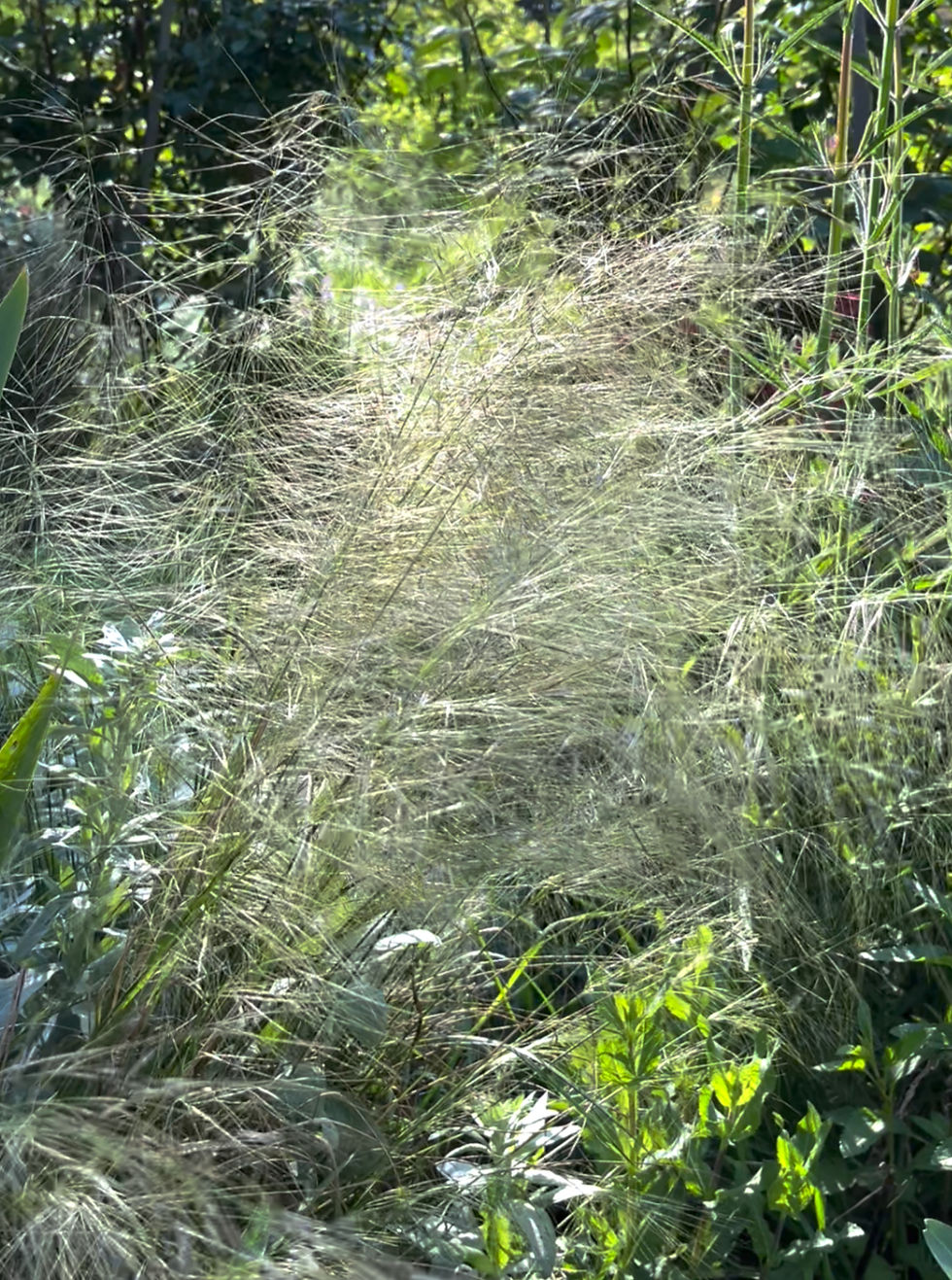
Austrostipa scabra is a perennial tussock grass – 30-80cm tall.
Flowering in late spring to summer. Its flowers have a fine and airy quality that catch the light perfectly.
It is widely distributed across all states, especially in drier regions. Found in open grassy woodlands and rocky outcrops.
Austrostipa scabra thrives in poor, shallow soils with and on sites with very high acidity. It is also very drought and frost tolerant.
These grasses play a vital role in preventing soil erosion, especially on steep slopes with poor soil, where other plants may fail.
Their seeds provide excellent forage for small animals and birds in the winter months as it is of high nutritional content.
This grass requires minimal maintenance and looks beautiful in a perennial garden, native garden a modern design or would do well in a revegetation project.
Poa labillardierei (Common Tussock Grass)

Poa labilldierei is a staple in many garden designs already- particularly useful in large scale urban landscaping, due to its adaptability, toughness and low maintenance.
It is a perennial, tussock forming grass which can either be fully evergreen or semi deciduous - depending on its growing conditions.
The large tussocks can spread to between 50-80cm across and its delicate flowering stems can reach 1.5m tall. Being mostly grown from seed its size and form can be somewhat variable, however there are some cultivars such as 'Suggan Buggan' which can provide more of a uniform appearance.
Poa labilldierei is native across southern and eastern Australia including Tasmania, Victoria, New South Wales, south east Queensland and the east of South Australia.
It is very adaptable to soil type and location, and does well in both wet and dry conditions, sun or part shade. It naturally occurs in coastal heathlands, open forests, grassy woodlands, river flats and creek lines. It is also tolerant of frost and can regenerate after fire.
Poa labilldierei provides habitat and food for birds, insects, small mammals and reptiles, and was used by the Indigenous Australians for weaving and string making.
I use it in perennial borders as it provides a great textural interest and an evergreen form in winter.
It’s also great mass planted on banks as its dense tussocks can stabilise soil and reduce weed competition. It also does well under trees- providing it can get a bit of sun.
It can survive drought but also does well with irrigation, which keeps it looking green all year.
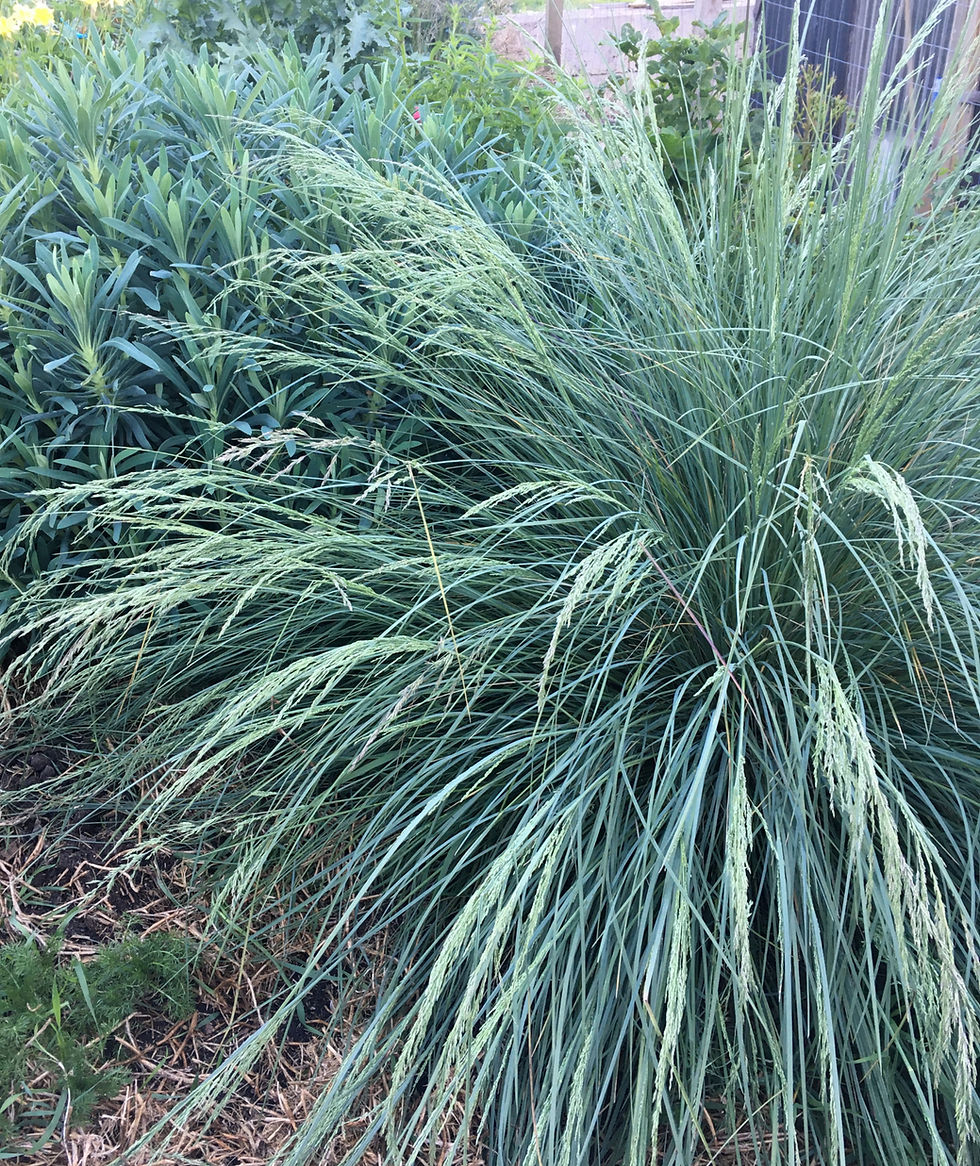

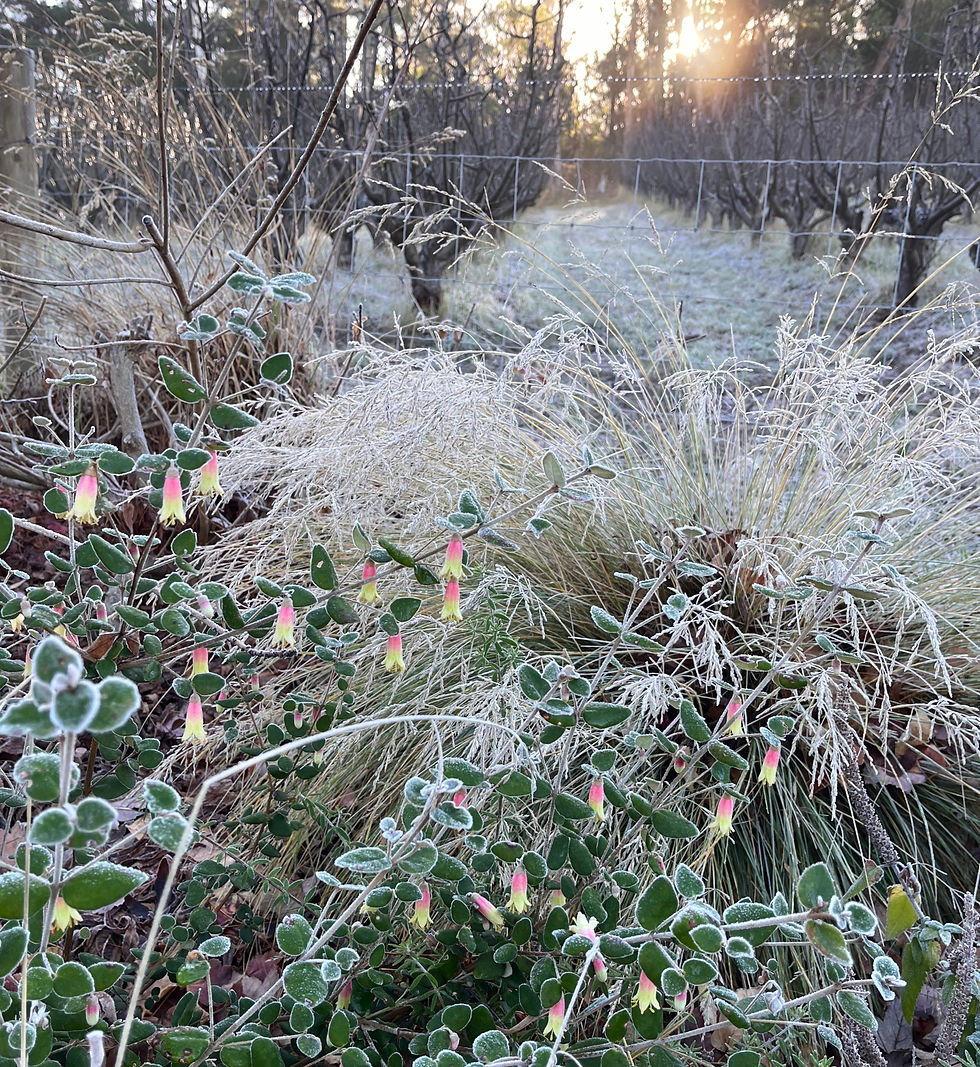
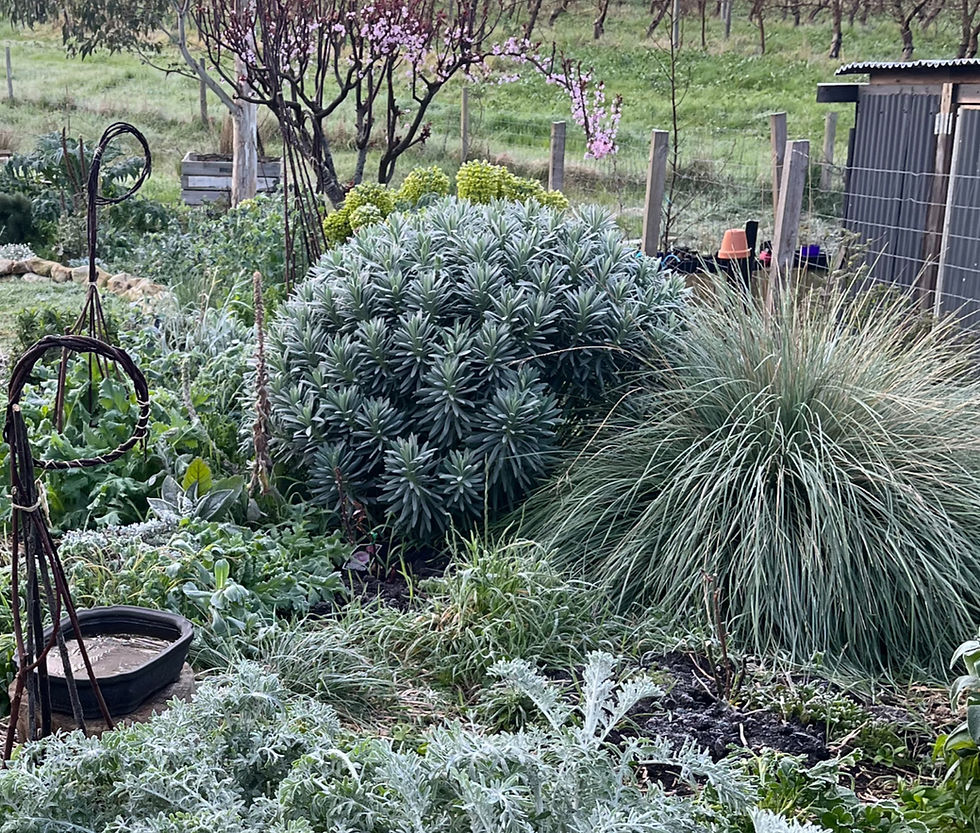
Deschampsia cespitosa


Deschampsia cespitosa commonly known as tufted hair-grass, is a perennial, tuft-forming grass native to many countries throughout the world and is already widely used in ornamental horticulture throughout Europe and North America. Deschampsia cespitosa is also an Australian native grass, naturally occurring in Tasmania and parts of southeastern mainland Australia.
Deschampsia cespitosa in naturally found in alpine and subalpine regions and thrives in damp environments such as the margins of salt marshes, wet grasslands and peaty sites. Although somewhat adaptable it prefers moist, poorly draining soils with neutral to acidic pH in sun to partial shade. It can tolerant some periods of dryness once established, but I would recommend other types of native grasses for a drought tolerant garden.
Deschampsia cespitosa forms dense tussocks with flower stems reaching 1.5m in height from Spring to late Summer.
Deschampsia cespitosa is a useful plant for damp sites, is very cold tolerant and will flower well in part shade. Being a notably ornamental native grass, it can be used in most garden styles. Cultivars such as 'Goldtau' are prized for their showy, golden plumes and adaptability.
Themeda triandra (Kangaroo Grass)

Themeda triandra is an evergreen perennial grass known for its unusual seed heads and rich warm tones through Summer.
Its leaves grow from a tussock to around 50cm in height and width and range from a nice bluey-green colour in spring to a golden, orange/brown colour in summer.
It flowers through late spring and summer and the flower spikes reach around 1-1.5m H.
Themeda triandra grows in a variety of soils from sand to clay- Acid to Alkaline- providing they are well drained, in full sun to part shade and needs little water once established. It is moderately frost tolerant.
It is found throughout Australia, Africa, Asia and the Pacific, growing in grasslands and open woodlands, where rainfall exceeds 500mm p/a.
Themeda triandra is considered a keystone species in Australian Grassland communities and is noted for its significance in ecological fire management, interestingly it is also considered a ‘Fire retardant plant’ according to the Country Fire Service.
It is of cultural significance to the Aboriginal Australians who used the seed as a food source- being nutrient dense and very high in protein. It is also a food source and habitat for many of our native birds, butterflies, mammals and reptiles.
I would use this grass as an ornamental in a native habitat garden, a modern garden design, or a perennial style planting. Although I find it more useful in a casual setting as it lacks some of the lightness and elegance of some other grasses.
This grass doesn’t need much maintenance other than a bit of a spruce up to remove old foliage and leaves. I find this easily done with a fine rake. It can be fully cut back in early spring to maintain a neat look but being evergreen this is not generally required.
Austrodanthonia pilosa (syn. Rytidosperma pilosum) Velvet Wallaby Grass
Austrodanthonia pilosa is an evergreen, perennial grass widespread across southern and eastern Australia including NSW, QLD, Vic, SA, WA and Tasmania. It is naturally occurring on dryish soils and semi shaded conditions in open woodlands and grasslands.
It grows from a neat tuft between 20-50cm in height and its flower inflorescence can reach up to 90cm tall in Summer.
Austrodanthonia pilosa can be found in native pastures and is known for its persistence and productivity. It is drought resistant and can play an important role in revegetation and erosion control, as its fine leaves remain green all year- providing ground cover and soil protection in the hottest months.
Austrodanthonia pilosa provides food and habitat for mammals, birds and insects.
I like to use this grass on the fringes of native bushland or pastures to draw the landscape into the garden.
Austrodanthonia caespitosa (also known as Rytidosperma caespitosum)(Common Wallaby Grass)
Austrodanthonia caespitosa, is a dense, evergreen perennial tussock grass characterised by very fine, long leaves and distinctive fluffy cream or white flower heads that appear mainly in spring and summer. Up to 90cm high.
It is adaptable, thriving across a wide range of Australian environments, and is native to SA, Vic, NSW, WA and Tasmania.
Austrodanthonia caespitosa grows well in various soil types, including sandy, loamy, and stony soils, acid or alkaline. It is drought and frost tolerant and also plays an important role in reducing erosion as it grows in such poor soils.
Austrodanthonia caespitosa provides nutritious winter forage for small birds and mammals and shelter for native insects. It is also culturally significant as Indigenous Australians have historically used it for weaving and medicinal purposes.
Useful in revegetation projects as it grows on poor soils, it also has a place in residential garden design- The lovely creamy white seed heads catch the afternoon light beautifully and provide interest in a smaller garden bed- reaching the height of 80-90cm. I have used them on verges and gravel gardens and can make up a beautiful native meadow. They do well with little to no maintenance.
Dichelachne crinite (Long Hair Plume Grass) and Dichanthium sericeum (Silky Blue Grass) are two notable mentions- Dichanthium sericeum has lovely seed heads- similar to a Pennisetum, but they don't seem to stand up so well and can look a bit raggedy in an ornamental garden. I haven't yet found the perfect place for this grass but I will persist as I think it could be a great little grass. Dichelachne crinite I know is a beautiful grass as I've seen it used interstate- but, disappointingly I can't seem to find it for sale here in SA. I will keep looking.
Final Thoughts
Although I'm in no rush to replace all of my exotic grasses with natives, I think there is certainly room for both.


Comments